How to drive a semi-truck: 8 tips for beginners


By The Schneider Guy
Estimated reading time: 2 minutes
Learning to drive an 18-wheeler does not stop at knowing how to correctly make a left turn. It takes hours of practicing with a trainer in a yard and on the road.
Here are eight underrated tips abouthow to drive a semi-truck to know as you become a professional truck driver.
Key takeaways
- Safe semi-truck driving takes practice, patience and awareness, especially when backing, changing lanes and navigating unexpected situations.
- When backing, G.O.A.L. as often as needed and prioritize accuracy over speed to help prevent avoidable accidents.
- Pre- and post-trip inspections, frequent mirror checks and safe following distances help drivers identify hazards before they become bigger problems.
- If something goes wrong, stay calm and predictable: never make unsafe recovery maneuvers, keep control of your lane and avoid swerving.
8 underrated tips for driving an 18-wheeler
1. Don’t be afraid to G.O.A.L when backing.
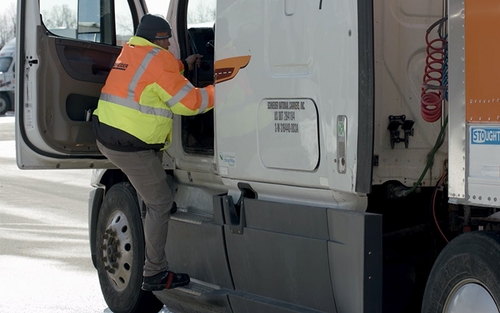
G.O.A.L – Get Out AndLook – as many times as you need when backing into a parking spot or dropping atrailer at a dock. It’s better to take the time you need to complete the back correctly than to cause an accident that could have been prevented.
2. Be aware of your trailer when changing lanes.
Your tractor-trailer is much larger than the other vehicles out on the road – it’s about 70 feet long- so you should always be aware of your trailer track when making alane change.Complete a safe lane change by:
- Checking and double-checking your mirrors and blind spots to ensure there is enough room for you to get over.
- Signaling for at least three seconds to make your intentions clear to other drivers.
- Taking at least seven seconds to complete your lane change (while still keeping an eye on your mirrors).
- Being as predictable as possible with your movements.
3. Do a good pre- and post-trip inspection.
Pre- and post-trip inspections are crucial for finding equipment issues that could threaten your safety while driving. Drivers are required to perform inspections every day and record them in their logs.
- A driver is required to complete a pre-trip inspectionat least once every day, and whenever a new trailer is picked up or a 10-hour break is completed.
- A driver is required tocomplete a post-trip inspection whenever a trailer is dropped, and at the end of each day.
Using a checklist during your pre- and post-trip inspections will ensure you examine every facet of your tractor-trailer and do not miss anything.
4. Keep your cool if you miss a turn or exit.
Your trip plan should include a thorough review of the turns you need to make along your route. If you do miss a turn when you’re out on the road:
- Do not panic.
- Never make a U-turn to recover.
- Don’t back across a roadway.
- Find a safe place off the roadway (not on the shoulder) to get your bearings. You may need to go around the block or to the next exit.
Make sure to look at all the signs when you take an exit. This will help make sure you know how to get back to the highway.
5. Pay attention to the tire path when you see the spot you want to park in.
Many times, when you go to park, the truck that was in the spot before left a perfect path of tire tracks. Try to aim your tires for that path.
You may be surprisedby how much you will improve your accuracy by paying attention to the path your wheels take. Of course, if you’re not sure about the path, remember to G.O.A.L.
6. Be alert to your surroundings.
Make sure you know where your blind spots are, andcheck your mirrors every 3-5 seconds to stay aware of everything around your tractor-trailer.
Stay focused on the road by:
- Putting your phoneaway while driving.
- Turning off your radio in poorweather conditions.
- Setting your GPS before you start your drive.
- Finishing your meal before you start your drive.
Also, strive to maintain a safe following distance of at least sevenseconds between you and the vehicle in front of you.
7. Keep both hands on the wheel.
When driving, keep both hands on the wheel to prevent wind from pulling your tractor-trailer to one side or the other.Maintaining a firm grip with both hands also allows for better control and quicker reactions in case of sudden changes in road conditions or unexpected maneuvers by other vehicles.
8. Avoid swerving.
If you are faced with a hazard such as a distracted driver cutting you off or an animal running onto the road, slow down safely, but maintain your lane. Do not swerve.
Looking for more helpful safety tips?
Schneider Guy loves the "Big Orange." He's passionate about the trucking industry and connecting people to rewarding careers within it. He's been the eyes and ears of our company since our founding in 1935, and he's excited to interact with prospective and current Schneider associates through "A Slice of Orange."